
Opinion
Eyo Festival: From Beauty To Terror By Jesutobi Olakunle Alabi

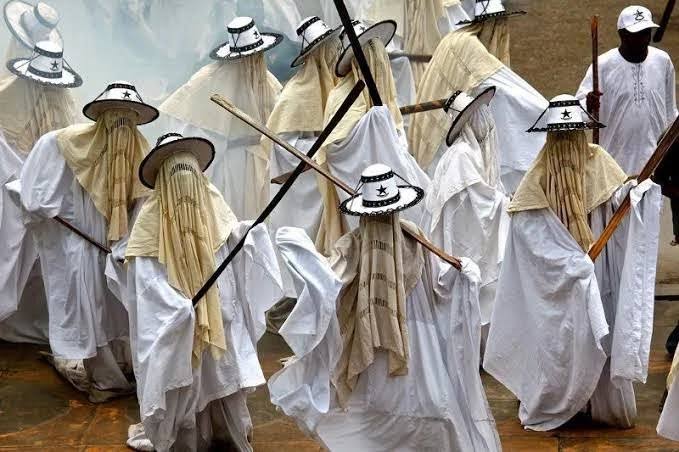
The rejuvenation of the Eyo Festival is one of the most appreciated cultural expressions of our time, and its significance in shaping Lagos’ identity cannot be overstated. As we take in the ambience and joy that sweep across Lagos whenever the white-clad masquerades take to the streets, it is important to reflect, inform, and make recommendations that will help preserve this heritage so that it continues to thrive for generations to come.
As a Lagosian born and raised on the soil of Surulere, it is clear to me that many of us rarely experience the full celebration, as most of the grandeur and pageantry are concentrated on Lagos Island. Yet, for those familiar with the lore and history of the festival, its meaning and impact run deep.
Historically, the Eyo Festival—also known as the Adamu Orisha Play—dates back to at least February 20, 1854, when it was first performed to honour the life and death of Oba Akitoye of Lagos. The festival traditionally serves as a procession to usher the souls of departed kings, chiefs, and notable Lagosians into the afterlife, and was later used to mark the installation of new leaders. Wikipedia
In earlier decades, especially in the 1990s and early 2000s, the festival was most commonly seen as a vibrant procession of masquerades dancing with their staffs (called opambata) through the heart of Lagos Island, with poetic chants and rhythmic drumming accompanying the spectacle. Eyos—believed to represent spirits of the ancestors—wore pristine white robes and colour-coded hats that indicated rank and lineage. Vanguard News
Yet as the festival gained popularity and grew into one of Lagos’ most iconic cultural events, an unfortunate pattern also emerged: incidents of harassment, intimidation, and violent enforcement of traditional rules—either real or perceived—by some masquerades. Videos circulating online from the 2025 Eyo Festival show scenes where four Eyo masquerades were seen assaulting a man with their staffs during a street procession. Additional footage captured objects thrown by residents in retaliation, as tensions flared during parts of the event. Sahara Reporters
These viral clips sparked sharp outrage on social media, with many Lagosians lamenting that the conduct diverged from what many remember the festival to be. Some observers suggested the violence stemmed from perceived breaches of tradition (such as improper attire), while others argued that even if traditional protocols were violated, the physical attacks were excessive and unjustifiable. DAILY TIMES Nigeria
This is, however, not the first time tensions have surfaced around the Eyo Festival. In 2017 during the Lagos@50 celebrations, clashes between factions of masquerades reportedly led to two deaths and multiple injuries before peace was restored by security forces. The Guardian Nigeria
These incidents demand honest reflection. If we truly want the Eyo Festival to draw global attention and retain its originality, then relying on outdated practices that result in violence and fear undermines both its cultural value and its potential as a centre of attraction for Lagos. Culture evolves, and so must the ways we express and protect it—especially in an age where technology and global visibility are intertwined with heritage tourism and community pride.
The festival’s beauty—the rhythmic dance, the dazzling attire, the humming drums, and the shared chants—commands *greater global attention and attractiveness* when presented in ways that celebrate unity and respect. This requires thoughtful revisiting of certain demographic practices, respectful crowd management, and intentional reforms that honour tradition while ensuring safety and inclusion for all participants and spectators.
Mo yo fu e mo yo fu arami…
Eyo o ni baje, Eyo oni daru oo…

-
 Breaking News3 years ago
BREAKING: CBN Redesigns Naira Notes
-
 Breaking News3 years ago
BREAKING: Tinubu Considers Temporary Subsidy On Petrol
-

 Breaking News2 years ago
JUST IN: Gbajabiamila Dies In UK
-
 News4 years ago
Drama As Church Gives Certificate Of Virginity To Ladies After Testing Them (See Photos)
-
 Crime4 years ago
Uproar As Student Teacher On Teaching Practice Impregnates 24 Girls, Headmistress, Four Female Teachers
-

 Breaking News1 year ago
JUST IN : Sacked Osun LG Chairman Killed Few Minutes After Returning To Office
-

 Breaking News2 years ago
BREAKING: Dangote Speaks As BUA Reduces Price Of Cement
-
 Crime4 years ago
JUST IN: Gunmen Storm Osogbo, Kill Man, Daughter Few Hours After His Wife Put To Bed (Photos)