
Politics
PDP AND ITS SOUL ON THE PLATEAU: WHY THE QUARRELS OVER A “DYING BABY”?

It is important that we reflect, with sincerity and historical clarity, on the state of the Peoples Democratic Party (PDP), one of the 18 officially recognized political parties in Nigeria today.
Despite relentless efforts by self-serving and unconscionable actors to undermine and discredit it, the PDP has refused to die. It has endured, survived, and continues to stand as a political institution rooted in the will of the people.
The PDP remains the party that helped restore Nigeria’s hope after years of prolonged and suffocating military rule. It is the party that boldly upheld the principle that power belongs to the people.
More significantly, the PDP holds a unique and emotional connection to Plateau State. It is widely acknowledged that the conceptual foundation of the party was laid in Jos, making Plateau not just a stakeholder, but a custodian of its soul.
Under the leadership of the revered father of Plateau, Chief Solomon Daushep Lar, the PDP was nurtured from an idea into a formidable national force. His legacy remains deeply woven into the identity of the party, both on the Plateau and across Nigeria.
History further reminds us of the PDP’s courage and political audacity—being the party that brought leadership from even the most unlikely circumstances, demonstrating a firm belief in redemption, inclusiveness, and democratic choice.
Since the return to democracy on May 29, 1999, following decades of military interruption (1966–1979 and 1983–1999), Nigeria has enjoyed 26 years of uninterrupted civilian rule—the Fourth Republic. The PDP was central to laying that foundation, with the election of President Olusegun Obasanjo marking the rebirth of democratic governance.
On the Plateau, the PDP’s dominance has been undeniable. From 1999 to date (with only a brief interruption between 2015 and 2023), the party has remained the defining political force. This reality reinforces a truth that is both emotional and historical:
PDP is Plateau, and Plateau is PDP.
This deep-rooted connection explains the intensity of the current internal struggles within the party. What some describe as crisis is, in reality, a contest over identity, ownership, and the future direction of a legacy institution.
Looking back at the Second Republic (1979–1983), it would have been unthinkable for Chief Solomon Lar and the NPP structure on the Plateau to abandon their ideological base for another platform. That same spirit lives on today. The PDP on the Plateau is, in many respects, a continuation of that legacy.
Therefore, it is both inaccurate and misleading to assume that national issues within the PDP can be separated from Plateau’s involvement. Plateau’s stake in the party is foundational, not peripheral.
The Caretaker Committee that emerged was not an accident—it was a natural response driven by this historical responsibility. To exclude Plateau in any effort to reposition or relaunch the PDP would be a grave miscalculation.
Indeed, what is happening today should not surprise keen observers. Like any enduring institution, the PDP has passed through the stages of introduction, growth, and maturity. What we are witnessing now is a necessary phase—a relaunch, aimed at repositioning the party for contemporary political realities.
The internal disagreements—the so-called “Gbas-Gbos”—are not signs of death, but evidence of a party struggling to redefine and strengthen itself.
Across all divides, there remains a shared consensus:
That PDP is inseparable from Plateau.
That the party must reclaim and maintain its electoral dominance.
That the legacy of Chief Solomon Lar must be preserved.
That the Plateau identity within PDP must not be diluted.
That those politically aligned elsewhere still recognize PDP as the viable alternative.
That Senator Jonah David Jang (Dara Baba Jang) embodies the continuing spirit of Lar’s leadership.
That recent political actions perceived as betrayal must be addressed with clarity and principle.
That unity of purpose is essential to rescue and reposition the party.
That the sacrifices of committed stakeholders must be acknowledged.
That PDP must be protected from manipulation, infiltration, and surrogate control.
CONCLUSION
The PDP on the Plateau is not a dying baby—it is a legacy under reconstruction.
The quarrels we see today are not over its death, but over its rebirth.
And in that rebirth, one truth must remain constant
The soul of the PDP lives on the Plateau—and must be protected at all costs.
Hon. S. Achigak A. Rukuba, PhD, MNIPR
Publicity Secretary, PDP Plateau State




-
 Breaking News3 years ago
BREAKING: CBN Redesigns Naira Notes
-
 Breaking News3 years ago
BREAKING: Tinubu Considers Temporary Subsidy On Petrol
-
 Breaking News2 years ago
JUST IN: Gbajabiamila Dies In UK
-
 News4 years ago
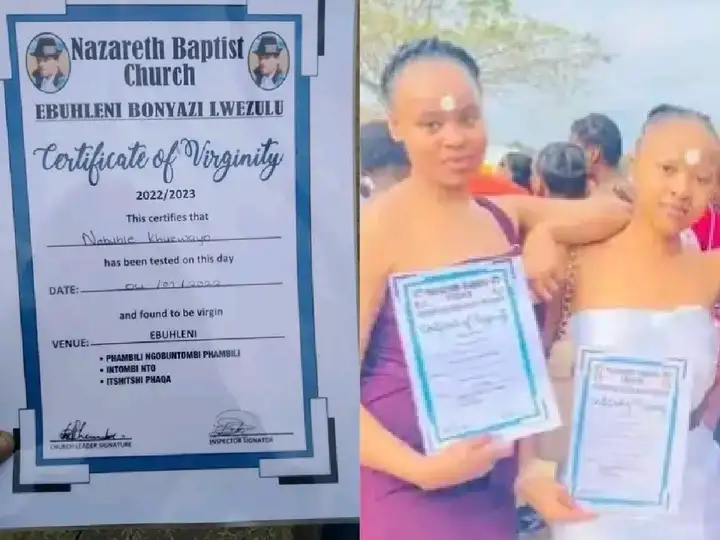
Drama As Church Gives Certificate Of Virginity To Ladies After Testing Them (See Photos)
-
 Crime4 years ago
Uproar As Student Teacher On Teaching Practice Impregnates 24 Girls, Headmistress, Four Female Teachers
-
 Breaking News1 year ago
JUST IN : Sacked Osun LG Chairman Killed Few Minutes After Returning To Office
-
 Breaking News2 years ago
BREAKING: Dangote Speaks As BUA Reduces Price Of Cement
-
 Crime4 years ago
JUST IN: Gunmen Storm Osogbo, Kill Man, Daughter Few Hours After His Wife Put To Bed (Photos)